Clear Understanding of Business Goals and Objectives
Information
Technology is a business enabler and must be assessed and evaluated
like all other departmental programs competing for company’s capital
and resources. Too often; IT is looked at as a black hole, not
aligned with and returning value back to the business as a business
partner. This is a costly misconception.
It is critical that
business strategy, goals, and objectives are clearly defined,
communicated across the organization and used as a strategy
and planning assumptions for IT projects and operational planning. Without this
foundation, IT is unable to prioritize their work and resources to
ensure they are effectively supporting the businesses goals
and needs… not creating a value gap.
An Example
A direct
retailer’s
IT group
possessed a significant backload of business projects and required
IT upgrades, as well as increased pressure to reduce costs. In
addition, there was a lack of alignment on how this work supported current company
objectives.
I
worked with business leadership to establish a
formal IT Program Management Office and Governance Process to formally review, prioritize, confirm
status of all IT work. Produced and published an IT Scorecard that
was published company-wide.
The result: Improved use of Company Assets and viable partnerships –
Business and IT aligned on prioritization of work. I also seeded
growth to expand the Program Management Office and set in action the
goal of implementing Portfolio Management to begin looking at
projects enterprise wide.
Establishment of Defined Measurements
“If a project is not being measured, no ones knows you are doing
it or if you are doing the right things.”
Creating a few key
measurements aligned with business goals and objectives is an
important 1st step in beginning to link operational
performance with what is important to the business…
improved efficiencies, working on what is most important to the
business and positive contributions to the bottom line.
An Example
A
public sector client was experiencing production support
issues, as well as an increase in on-going support costs as a result
of their ERP implementation. Working
with my leadership team, we implemented a
common approach for measuring and reporting on the IT work being performed
- break/fix, user support, and enhancement initiatives.
To
improve efficiencies, we began implementing ITIL practices and
defining a roadmap for implementing ITIL as part of an on-going
operational improvement initiative. Met with stakeholders; to
review and confirm Service
Levels needed to meet business needs, validate proposed
measurements and approach for reporting.
The result:
Improved Accountability and partnership! Each of the business departments
had improved visibility to the resources the IT department
were expending and on what type of work. Reporting metrics
were improved and available and used as input to monthly Operational
reports. Business authorized incremental budget for resources to
address priority business needs.
Right People in the Right Chairs
“A key objective of leadership is to maximize strengths and
minimize weaknesses to achieve optimum performance.”
“People are the most important asset” is a well-known cliché. While
some debate this, the majority agrees that while talent is vital,
equally important to success is an established game plan for
on-going evaluation and building of talent. Knowing
your talent needs and current talent resources, as well as
attracting, retaining, and positioning talent for success is key to
building an effective and efficient organization.
An Example
A $2B retailer was
going though a business transformation, implementing ERP and
significantly changing their operating model. As a result, the IT
organization had fallen out of alignment with business objectives
and had significant talent and skills gaps.
Partnering with HR, we developed an IT
organization and staffing model structured to align with the
business and IT budget. This included the review and revision of
required roles and responsibilities, review and assessment of staff,
identification of skills gaps, and a transition plan. Evaluated and
outsourced non-critical maintenance roles.
The result: Improved IT service delivery to business! We were able to
provide new
opportunities and growth for several of our best talent. Non-critical skills
were re-deployed or separated. Service delivery model was
improved without additional resources or costs.
In Summary
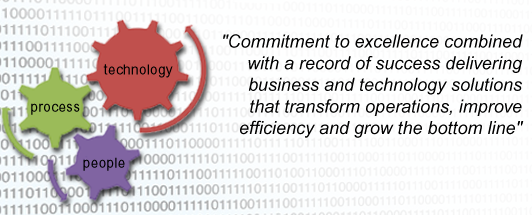
Value = Benefits – Costs
A key to
accelerating value delivery is engaging results oriented,
experienced people with:
-
Strong
business acumen and a keen eye for identifying benefits and
costs;
-
An
Understanding of integration of People, Processes, and
Technology;
-
Skills to
build necessary relationships across organizations to get
things done; and
-
Focus and
ability to execute and deliver successfully on-time and
on-budget.
return...






 ERP
Service Delivery & Implementation
ERP
Service Delivery & Implementation